What Manufacturers Are Prioritizing in Automation
Overview Summary
- Many manufacturers are starting automation efforts with part picking, not full line replacement
- Repetitive picking tasks are prioritized because they directly affect throughput and labor efficiency
- High-mix picking slows changeovers and creates inconsistency across shifts
- Ergonomically risky manual handling is a growing driver due to safety and labor retention concerns
- Automating bottleneck picking stations often unlocks capacity across an entire cell
- Robotic picking is frequently the entry point because improvements compound downstream
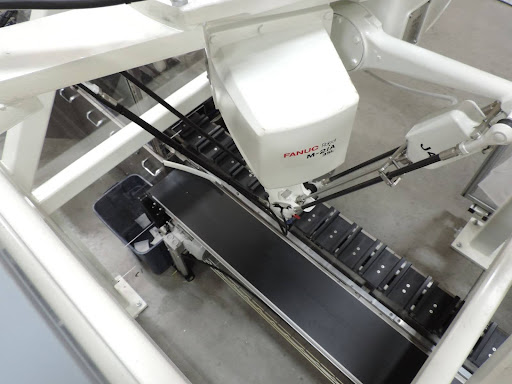 Manufacturers rarely automate everything at once. Instead, they focus on specific tasks that create daily friction on the plant floor. For many tasks, small improvements deliver immediate, measurable results.
Across industries, automation priorities are becoming more consistent. The first projects tend to target areas where labor, quality, and throughput intersect, and where performance issues are already well understood internally. One category shows up again and again at the top of the list—manual parts picking.
Below are the automation priorities manufacturers are focusing on first.
Repetitive Part Picking That Feeds Automated Equipment
In many facilities, highly automated machines are still dependent on manual part loading.
Common examples include:
- Loading parts into fixtures
- Feeding assembly or inspection stations
- Presenting components to packaging equipment
These tasks are often repetitive, physically taxing, and tightly coupled to cycle time.
Why this is prioritized
- Direct, visible impact on output
- Easy to measure before-and-after performance
- Clear labor utilization and efficiency gains
When manual picking sets the pace for automated equipment, it caps the performance of the entire cell. Automating this step allows machines to run at their intended capacity rather than waiting on human intervention.
High-Mix Picking That Slows Changeovers
High-mix environments introduce complexity that manual picking struggles to handle consistently.
Operators may need to:
- Sort similar-looking parts
- Adjust orientation based on part type
- Follow SKU-specific handling instructions
These tasks rely heavily on experience and attention to detail, which can vary by operator and shift.
Why this is prioritized
- Reduces changeover time between SKUs
- Improves consistency across shifts
- Lowers dependence on tribal knowledge
Manufacturers are prioritizing automation here because flexible robotic systems, especially vision-guided solutions, can adapt to variation without constant retraining or reprogramming.
Ergonomically Risky Manual Handling
Manual picking is also one of the most common sources of ergonomic risk.
Typical examples include:
- Reaching repeatedly into bins
- Handling small, awkward, or sharp parts
- Repetitive wrist and shoulder motion
Even when injury rates are low, fatigue and discomfort affect productivity and morale.
Why this is prioritized
- Strong justification from a safety and compliance perspective
- Easier internal alignment between EHS and operations
- Long-term labor stability and retention benefits
Automating these tasks reduces physical strain while making the work environment more sustainable as labor availability tightens.
Picking Tasks That Create Downstream Quality Issues
Not all picking problems show up at the picking station.
Issues often emerge later in the process, including:
- Orientation-sensitive loading errors
- Sorting mistakes tied to assembly accuracy
- Manual inspection combined with picking under time pressure
These errors lead to rework, scrap, or line stoppages.
Why this is prioritized
- Improves first-pass yield
- Reduces unplanned downtime
- Protects quality metrics without adding inspection labor
By stabilizing part presentation early, manufacturers prevent quality issues from cascading downstream.
Bottleneck Stations That Limit the Entire Cell
Many facilities discover that a single manual picking station is limiting the entire production cell.
Automating that one step can:
- Unlock capacity across multiple downstream operations
- Improve utilization of existing equipment
- Create immediate, plant-level visibility of improvement
Why this is prioritized
- Multiplies the impact of automation
- Maximizes return without expanding the footprint
- Delivers results leadership can see quickly
Rather than adding new machines, manufacturers are increasingly focused on removing the constraint that already exists.
How to Benchmark Your Own Facility
Manufacturers typically start by asking a few practical questions:
- Where does manual picking set the pace for automated equipment?
- Which picking tasks require the most training to get “right”?
- Where do quality issues trace back to part presentation or orientation?
- Which roles are hardest to staff or retain?
- Which stations require the most daily intervention by supervisors?
When the same area shows up in more than one answer, it is usually the best place to start.
What Successful First Automation Projects Have in Common
Across industries, the most successful initial automation efforts tend to share these traits:
- Clear before-and-after performance metrics
- Minimal disruption to surrounding processes
- Benefits that operators notice immediately
- Improvements that compound over time
These projects build confidence internally and create momentum for future automation.
Why Robotic Picking Is Often the Entry Point
Robotic picking sits at the intersection of labor availability, quality consistency, and throughput. Improving it stabilizes everything downstream. Machines run more predictably, quality improves earlier in the process, and operators are freed from repetitive tasks that limit scalability.
This is why many manufacturers view robotic picking not as an isolated upgrade, but as the foundation for broader automation.
Remtec Is Here to Assist with Your Manufacturing Automation Goals
Remtec works with manufacturers to identify picking tasks that are strong candidates for automation, especially in high-mix, variable environments where flexibility matters as much as speed.
By focusing on real production constraints rather than theoretical automation, Remtec helps facilities implement robotic picking systems that integrate smoothly with existing equipment and deliver measurable results.
To learn more about how robotic picking could stabilize throughput, improve quality, and reduce labor strain in your facility, contact Remtec to explore solutions tailored to your operation.