What the Numbers Really Say About Manual vs. Automated Palletizing
Overview Summary
- Manual palletizing often costs far more than facilities realize once labor, overtime, injuries, and turnover are factored in.
- End-of-line staffing shortages can create production bottlenecks that impact the entire manufacturing process.
- Repetitive lifting and stacking tasks expose facilities to significant ergonomic and workers’ compensation risks.
- Robotic palletizing systems provide more consistent throughput, improved uptime, and reduced labor dependency.
- Many palletizing automation projects achieve payback faster than expected because the ROI is relatively straightforward to measure.
- The strongest business case starts with understanding your current labor, overtime, injury, and downtime costs.
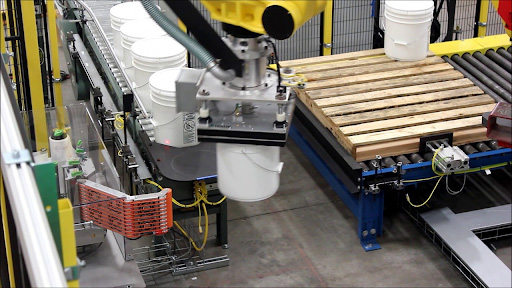
Your Palletizing Line Is Already Behind
For many manufacturers, palletizing is one of the last highly manual processes remaining on the production floor. Cases come off the line efficiently, packaging equipment performs as expected, and products are ready to ship. Then they reach the end of the line, where employees manually stack boxes onto pallets shift after shift.
Most engineering managers and operations leaders already recognize that palletizing can be automated. The challenges include helping them understand the technology, as well as assisting them in building a financial case strong enough to gain internal approval.
The Hidden Cost of Manual Palletizing Labor
At first glance, manual palletizing may seem like a manageable labor expense. However, the true cost becomes clearer when facilities calculate annual labor hours dedicated solely to stacking pallets.
Consider a common manufacturing operation:
- Three shifts per day
- Two palletizing operators per shift
- Five days per week
- Fifty weeks per year
That staffing model can easily exceed 12,000 labor hours annually dedicated to palletizing activities.
Once wages, benefits, payroll taxes, overtime exposure, and turnover costs are included, labor expenses can quickly approach or exceed hundreds of thousands of dollars each year.
What makes these costs difficult to identify is that they are often spread across multiple departments:
- Operations
- Human resources
- Safety
- Production
- Maintenance
As a result, few organizations ever see the complete financial picture in one place.
Overtime and Staffing Shortages Make the Problem Worse
Labor shortages continue to challenge manufacturers across many industries. When facilities struggle to maintain staffing levels, palletizing frequently becomes one of the most difficult positions to fill consistently.
During periods of increased demand, many plants rely on:
- Overtime hours
- Temporary labor
- Additional shift coverage
- Reassigned production personnel
These solutions may keep shipments moving, but they can create new problems elsewhere in the operation.
When operators are pulled from upstream processes to support palletizing, production efficiency suffers. The result is often a hidden throughput penalty that extends far beyond the end of the line.
Ergonomic Risks and Injury Costs Add Up Quickly
Manual palletizing involves repetitive motions that place significant physical demands on employees.
Common activities include:
- Lifting
- Twisting
- Reaching
- Repetitive stacking
- Handling awkward or heavy cases
Over time, these motions can contribute to strains, sprains, and other workplace injuries.
Beyond the direct costs of medical treatment and workers’ compensation claims, injuries can create additional expenses through:
- Overtime replacement labor
- Temporary staffing
- Training replacement employees
- Reduced workforce flexibility
- Lost productivity
Many automation projects gain support not only because they improve efficiency, but because they reduce exposure to repetitive-motion injuries and create a safer work environment.
Throughput Consistency Is Often the Biggest Opportunity
When manufacturers evaluate palletizing automation, they often focus on speed. However, consistency is usually the primary advantage.
Manual palletizing performance naturally fluctuates throughout the day due to factors such as:
- Shift changes
- Fatigue
- Training differences
- Staffing shortages
- Product mix changes
These fluctuations create small interruptions that may seem insignificant individually but can accumulate into meaningful production losses over time.
Automated palletizing systems help eliminate much of this variability by maintaining consistent cycle rates throughout the shift.
Whether production is running at 2:00 PM or 2:00 AM, the system performs according to the same programmed process.
Why Palletizing Is Often the First Automation Project Approved
Many manufacturing facilities view palletizing as one of the most practical entry points into automation.
Unlike some automation initiatives, the return on investment is relatively straightforward to evaluate.
Decision-makers can typically calculate:
- Labor savings
- Overtime reduction
- Injury risk reduction
- Throughput improvements
- Uptime gains
Because these factors are measurable, palletizing projects often become easier to justify than more complex automation initiatives.
For facilities experiencing labor challenges, the financial case can become compelling very quickly.
What a Modern Robotic Palletizing System Changes
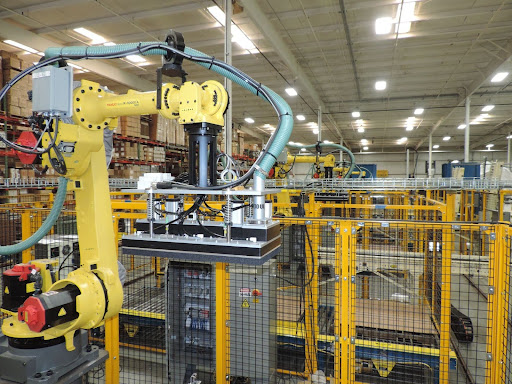
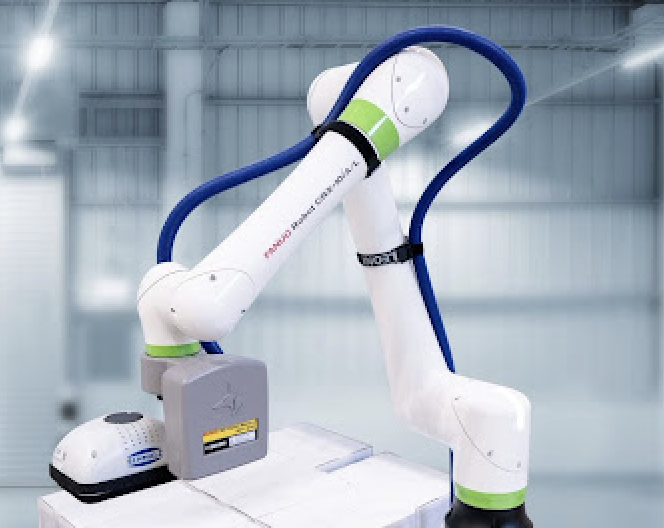
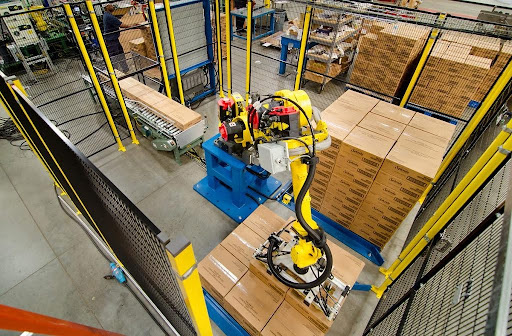
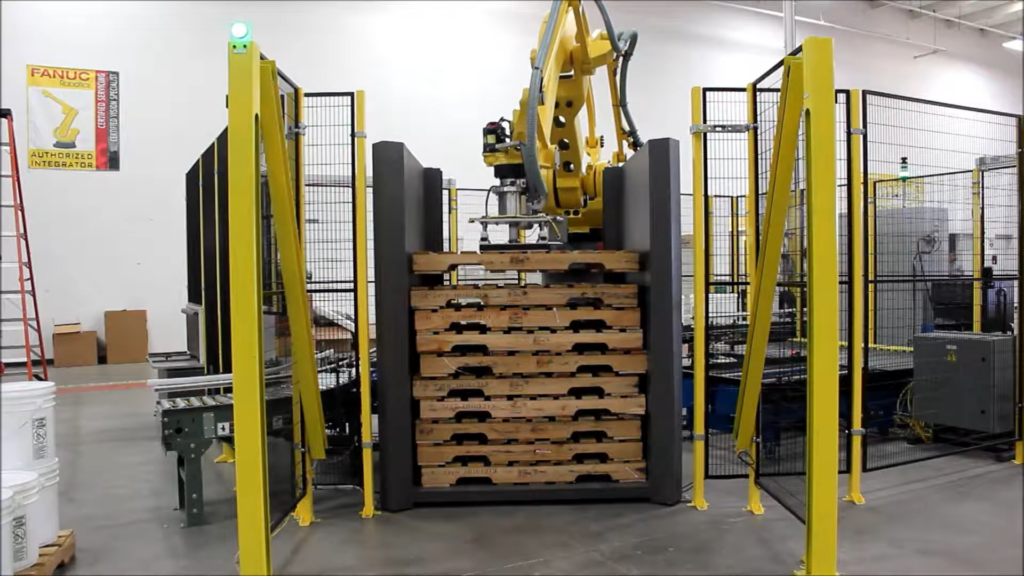
Modern robotic palletizing systems provide benefits that extend beyond replacing manual stacking.
Potential advantages include:
Consistent Cycle Rates
Automated systems maintain predictable performance regardless of shift, staffing levels, or operator fatigue.
Automated Pattern Management
Pallet configurations can be programmed and repeated consistently without relying on operator memory.
Reduced Labor Dependency
Employees can be reassigned to higher-value production activities where skilled labor creates greater impact.
Faster Recovery After Interruptions
Automated systems can often resume production more efficiently after line stoppages or pallet changes.
Improved Workplace Ergonomics
Repetitive lifting and stacking activities can be significantly reduced or eliminated.
When Palletizing Automation May Not Be the Right First Step
Automation is not the right solution for every situation.
Facilities may benefit more from addressing other operational challenges first if they have:
- Highly inconsistent product flow
- Poor case quality
- Very low production volumes
A qualified automation partner should help identify whether palletizing is truly the highest-value opportunity before recommending equipment.
In some cases, improvements to conveyors, packaging processes, or upstream material handling systems may deliver a faster return.
Building a Realistic Business Case for Automation
The most successful automation projects begin with accurate baseline data.
Before evaluating robotic palletizing solutions, many facilities benefit from gathering four key metrics:
- Annual palletizing labor hours
- Overtime costs related to end-of-line staffing
- Injury incidents and ergonomic concerns
- Downtime associated with staffing shortages or pallet rebuilding
These numbers create a foundation for evaluating potential returns and comparing automation options objectively.
How Remtec Helps Manufacturers Modernize End-of-Line Operations
For manufacturers exploring robotic palletizing, success depends on more than selecting a robot. It requires a solution designed around the realities of the existing production environment.
Remtec Automation specializes in industrial robotic integration and automation solutions that help manufacturers improve throughput, reduce labor dependency, and create safer production environments. Rather than forcing a complete equipment replacement strategy, Remtec works to integrate automation with existing operations whenever practical, helping facilities modernize while minimizing disruption.
Ready to Evaluate Your Palletizing Costs?
If labor shortages, overtime costs, ergonomic concerns, or throughput limitations are affecting your operation, now may be the right time to quantify what manual palletizing is truly costing your facility.
Contact Remtec to discuss your current process, evaluate automation opportunities, and determine whether a robotic palletizing solution can deliver measurable ROI for your operation.